




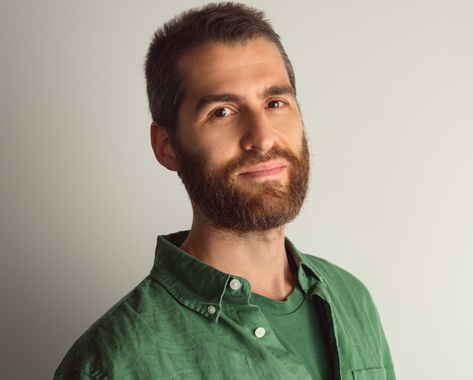
Zimra Beiner

Opening Reception: Friday, January 9, 6–8 pm
Artist Walkthrough: Saturday, January 10, 2:30 pm
At the entrance of the Güell park there were some thirty workmen breaking tiles and reassembling the fragments like decorative elements. A bystander said: “How strange! Thirty men breaking pieces and further up, some others are putting them back together. I’ll be hanged if I know what’s going on!”
— Quoted in Ellsworth Kelly’s “Fragmentation and the Single Form” from a 1905 article on Antoni Gaudí
HB381 is pleased to announce Eating the Floor, Zimra Beiner’s second solo exhibition with the gallery following If It Holds It Grows at Hostler Burrows LA. Beiner (b. 1985, Canada) is well-known for his knotted, rough-hewn, almost molten ceramic works which take the form of latticework arabesques in stoneware clay. He often aims to examine what he calls “the intersection between reality and fiction,” asking the viewer to consider how the physical substance of clay, gritty with aggregate, and glazes, eddying together, are inflected with representational fictions, the way that a bramble of coiled lengths of clay might cohere into a knot of roots or a bird’s nest without fully becoming either.
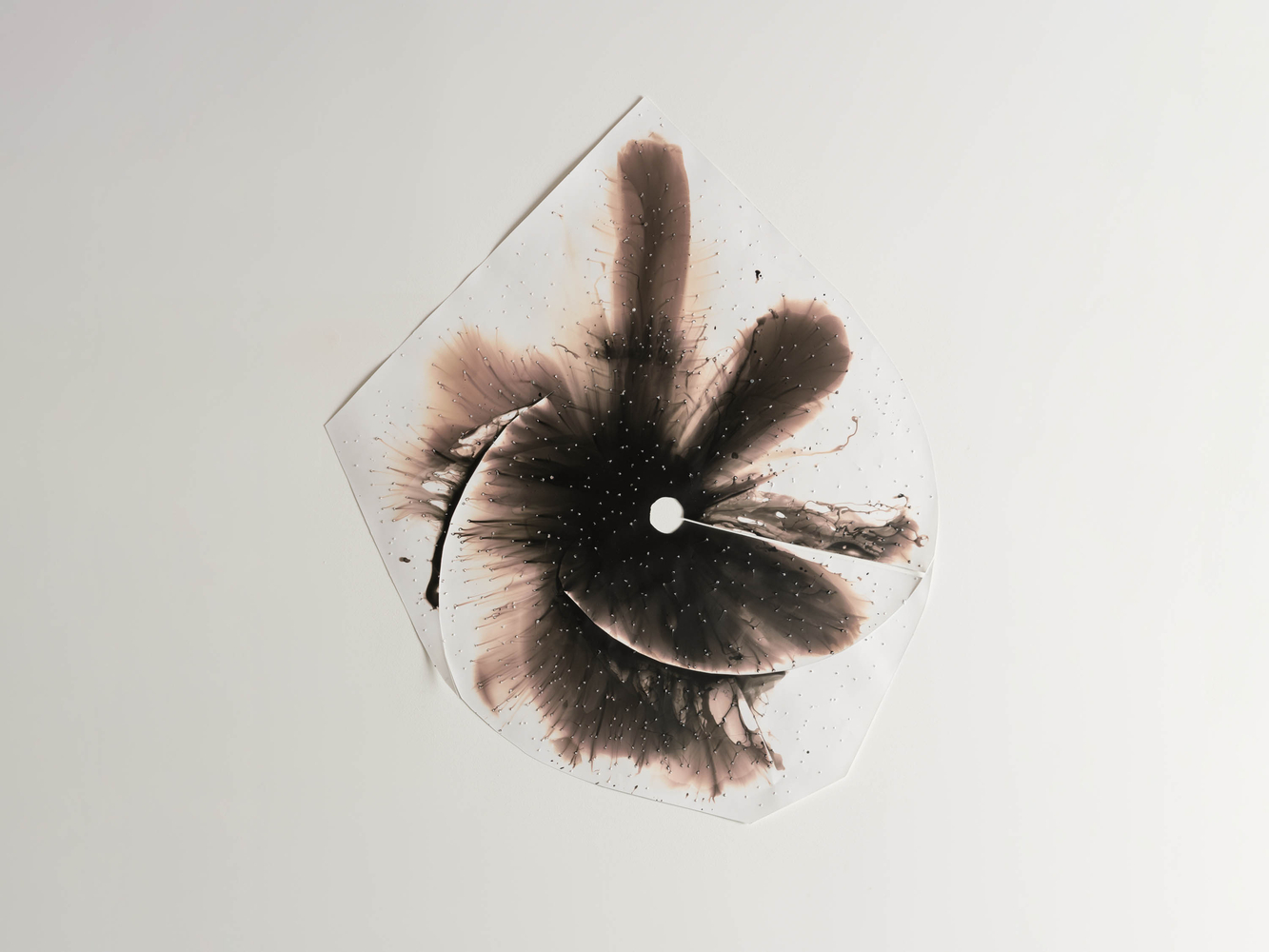
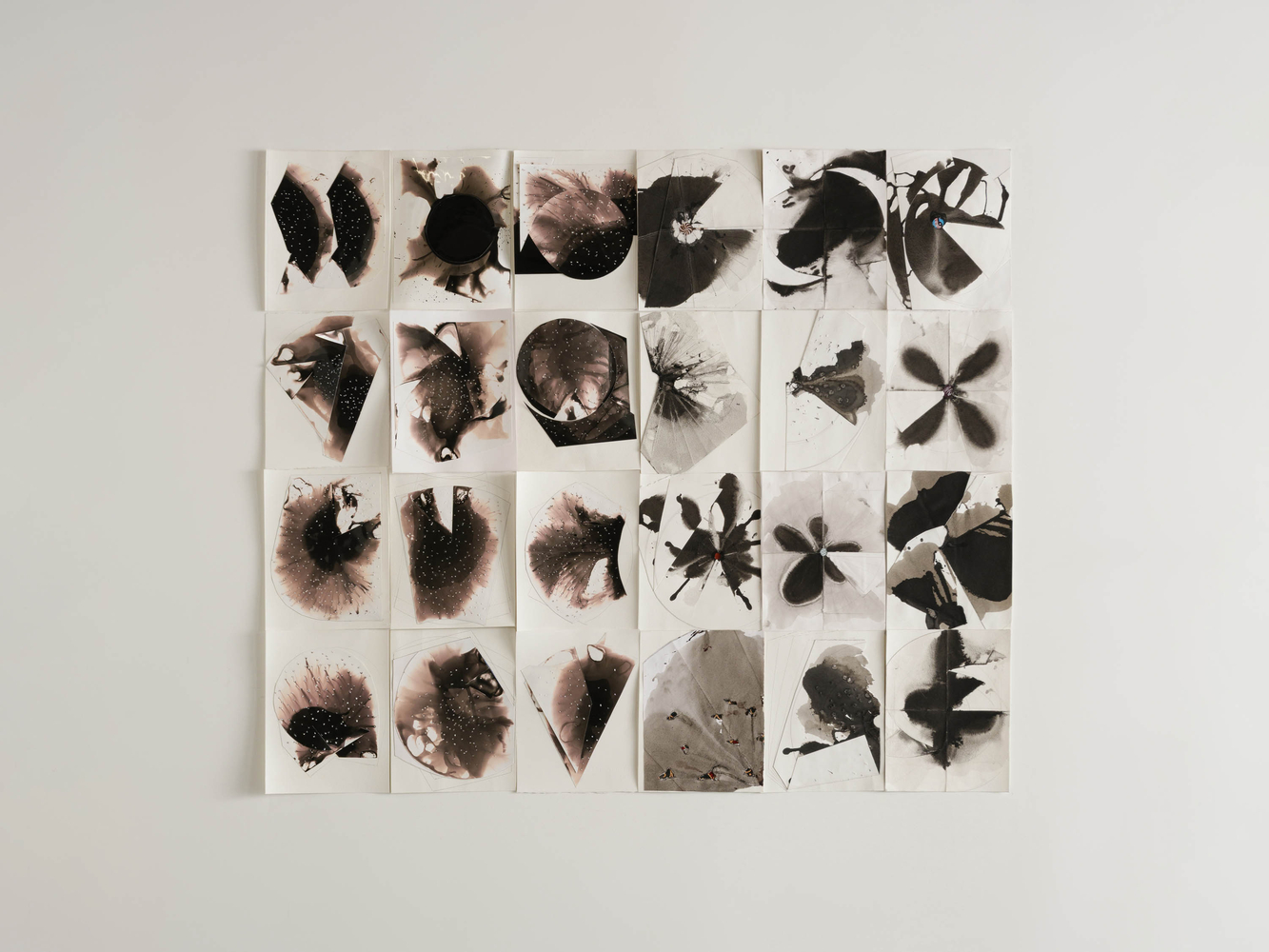
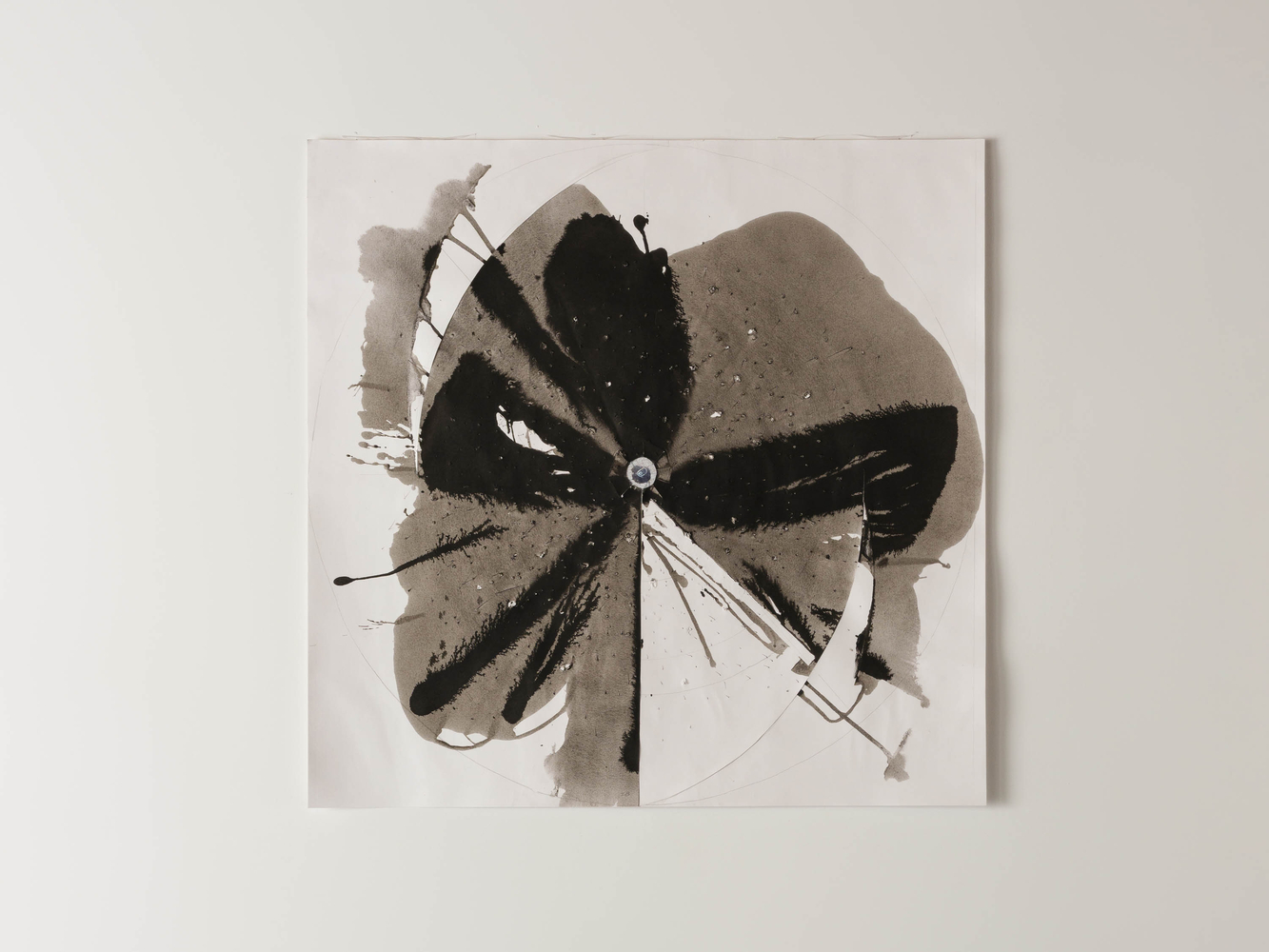
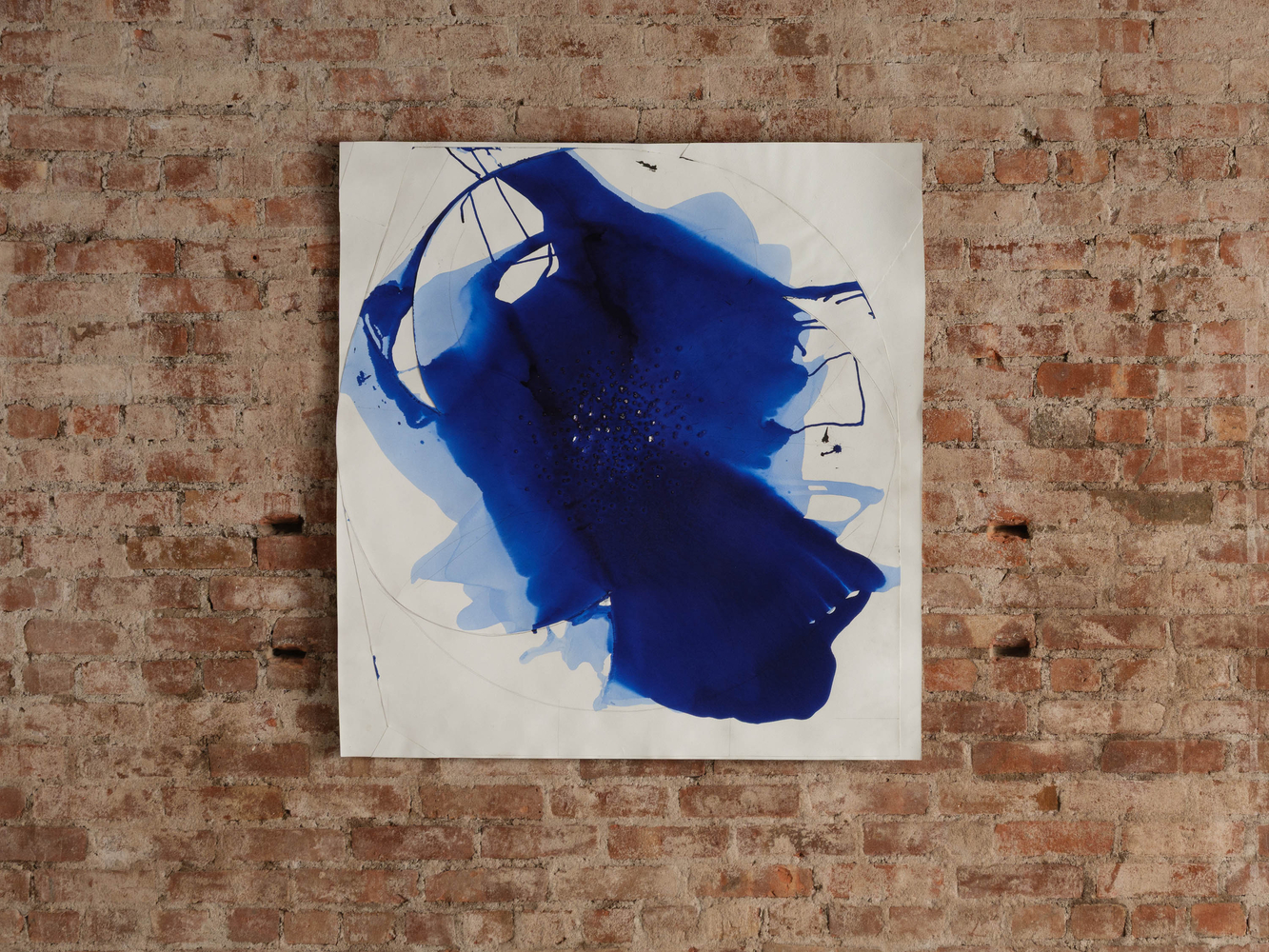
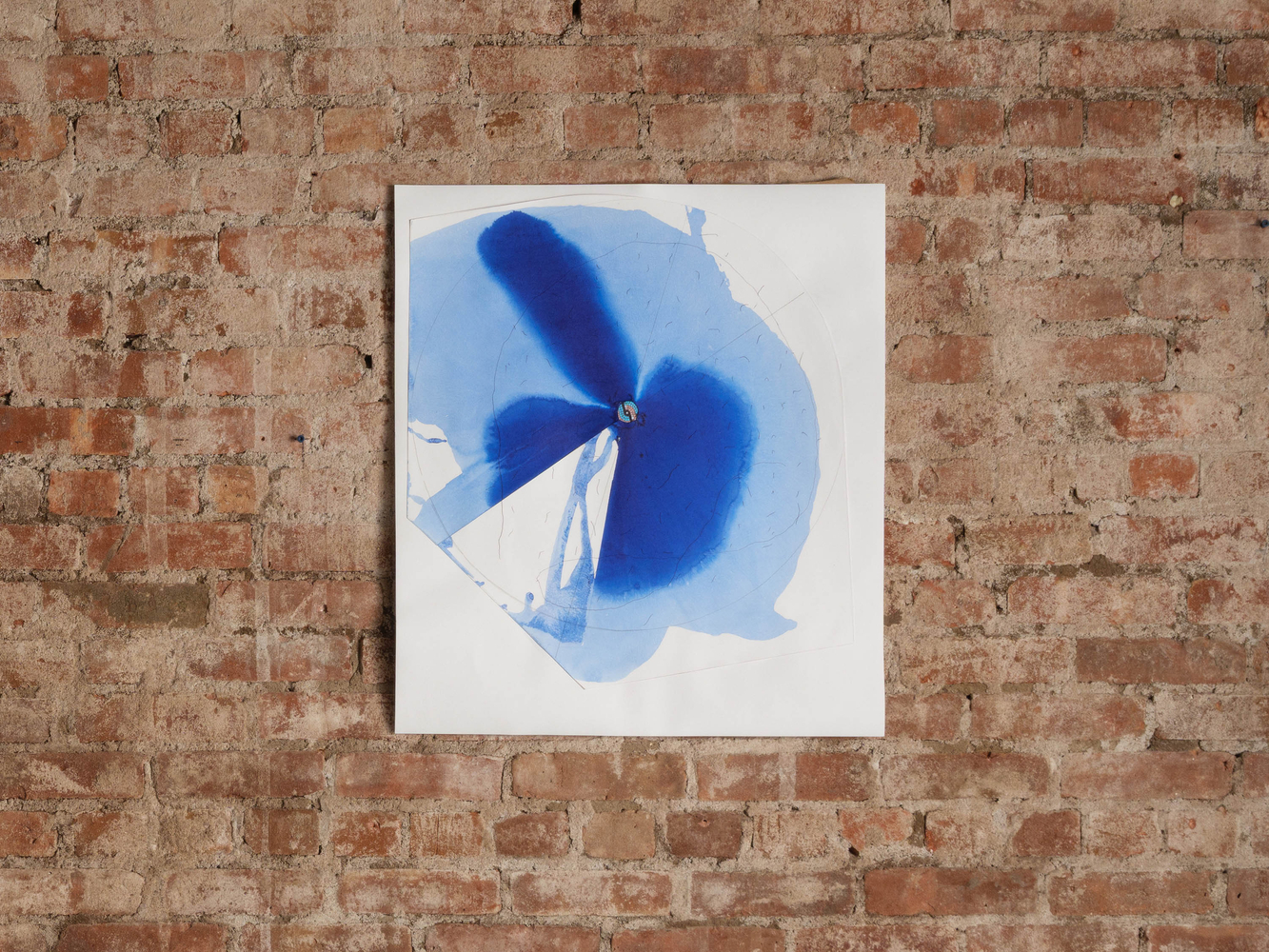
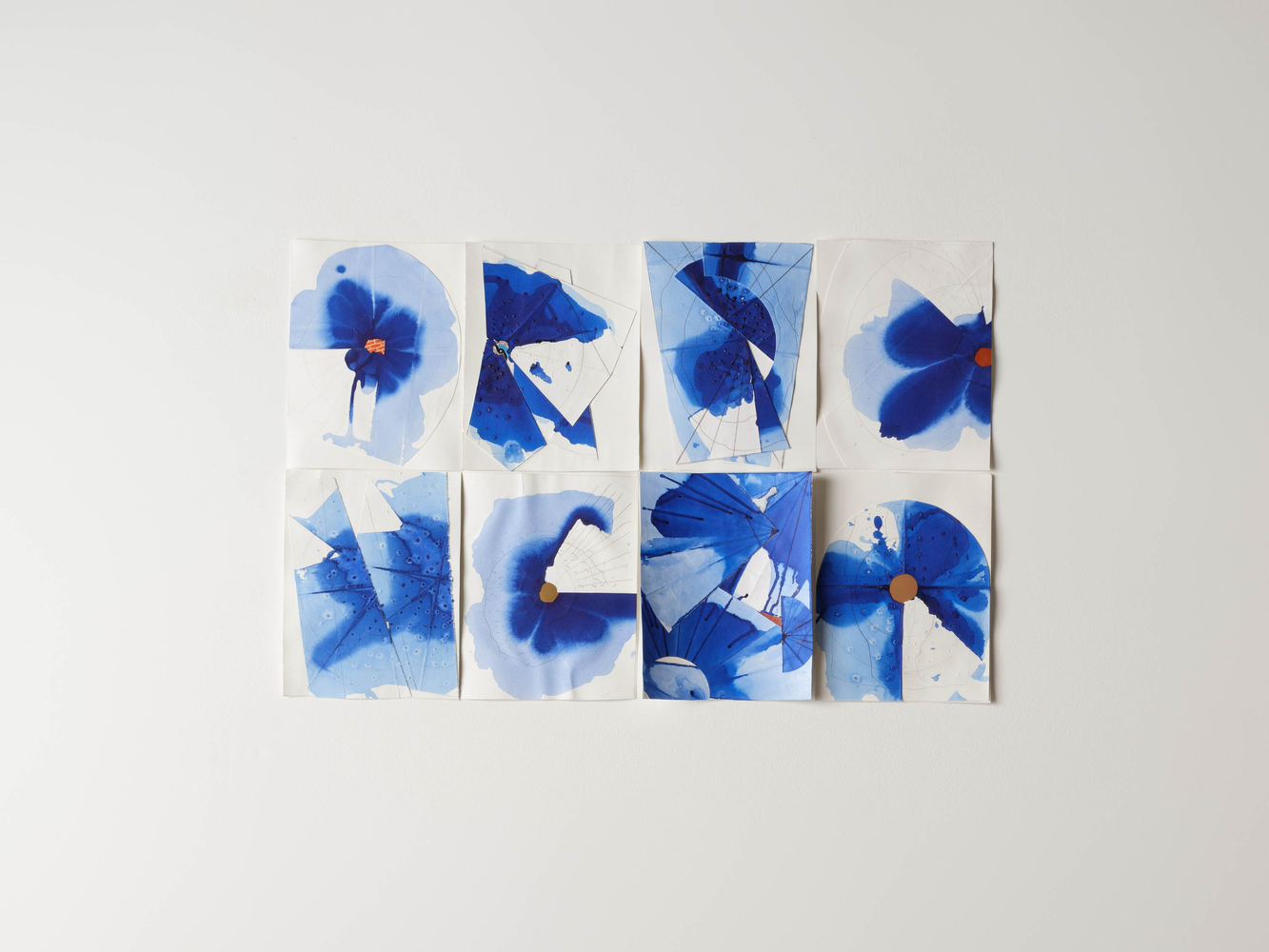
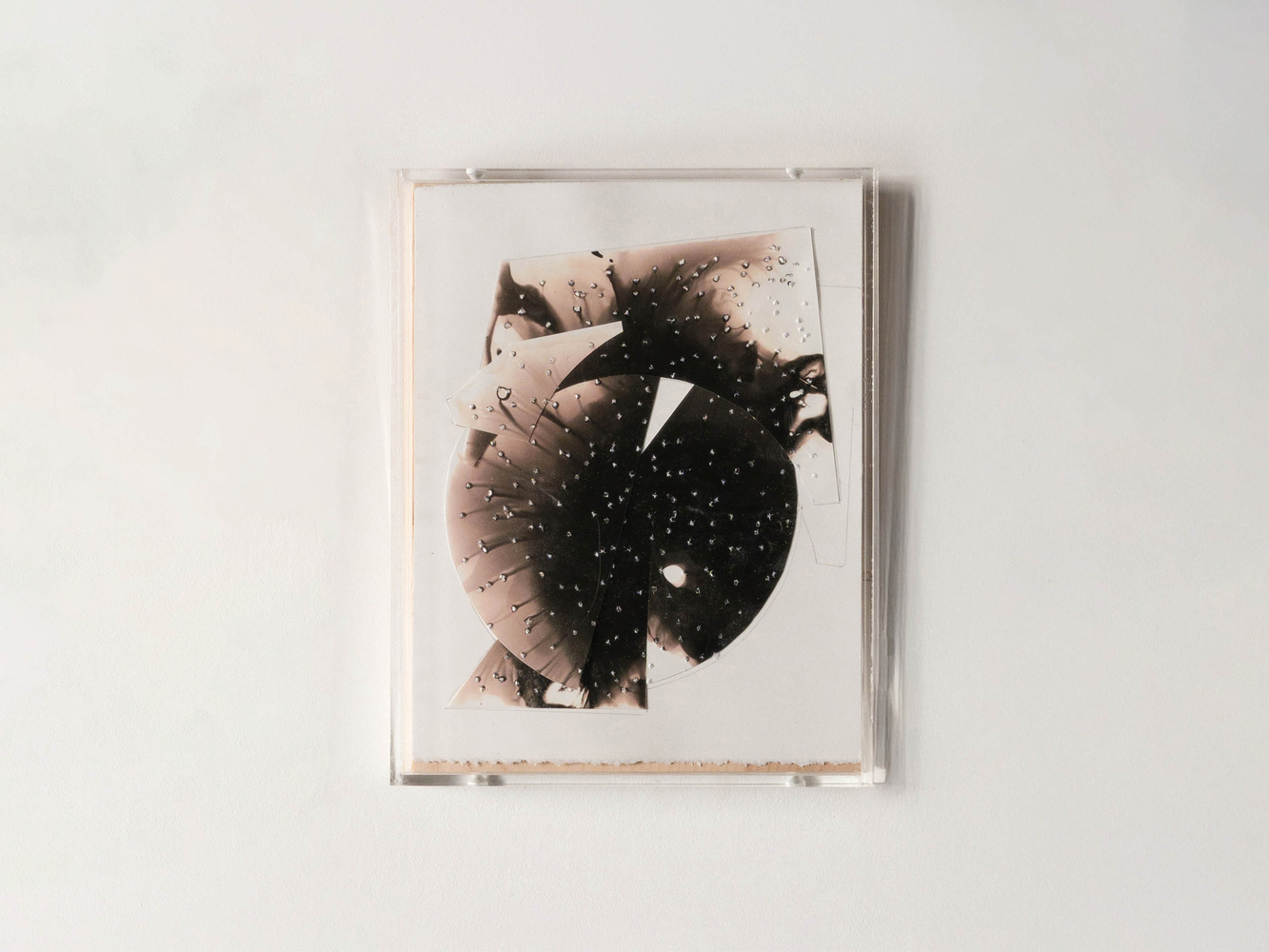
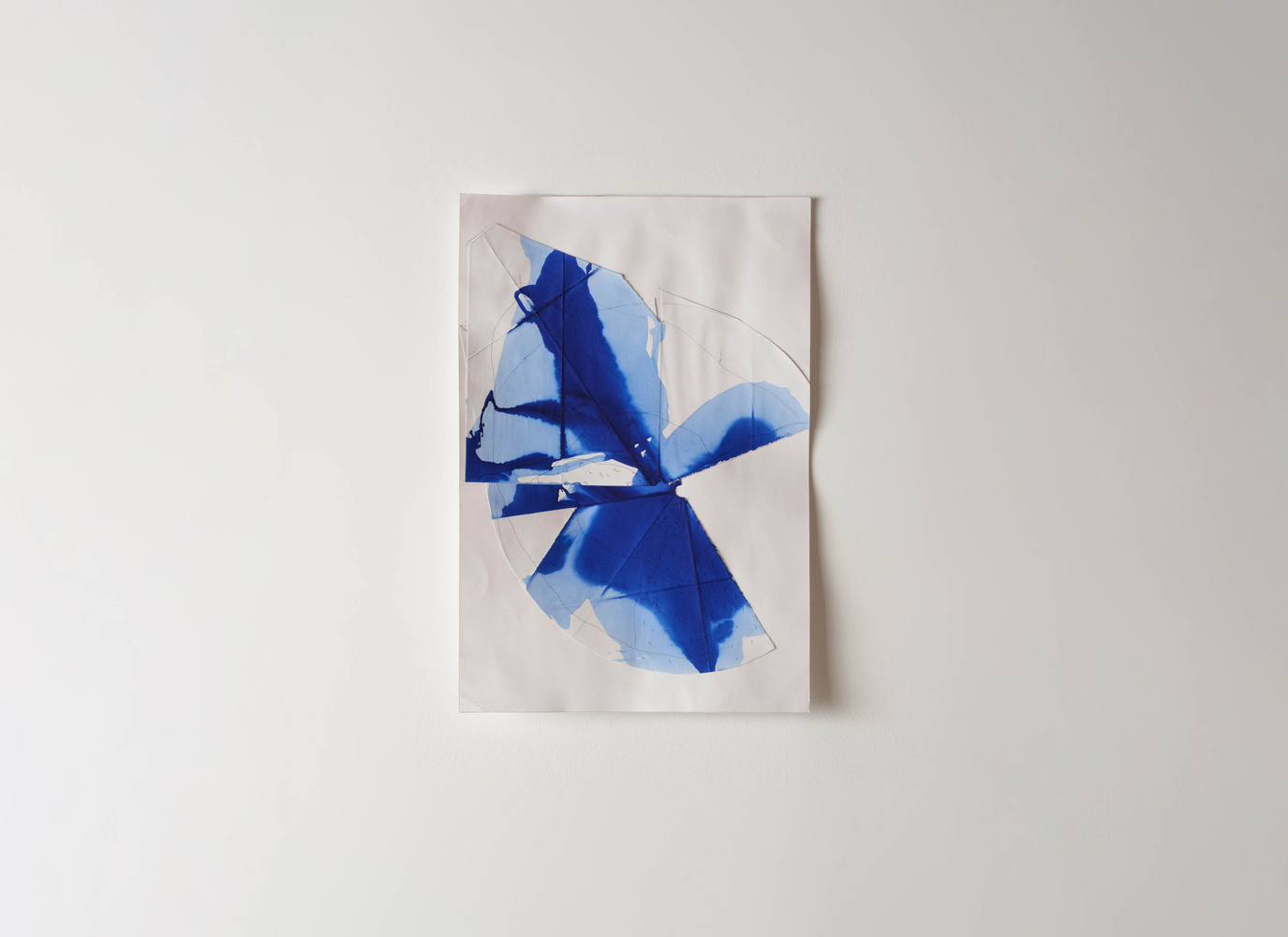
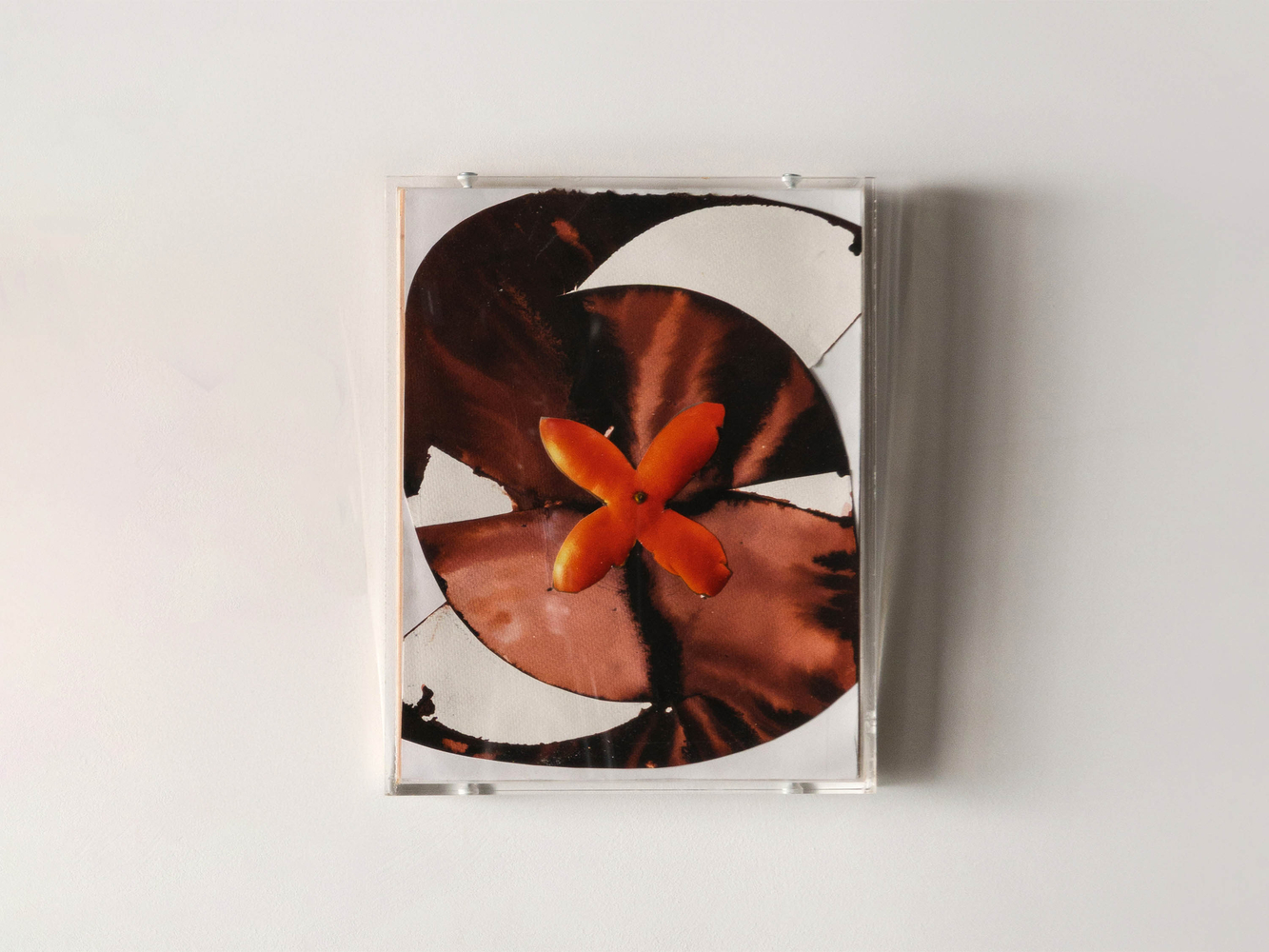
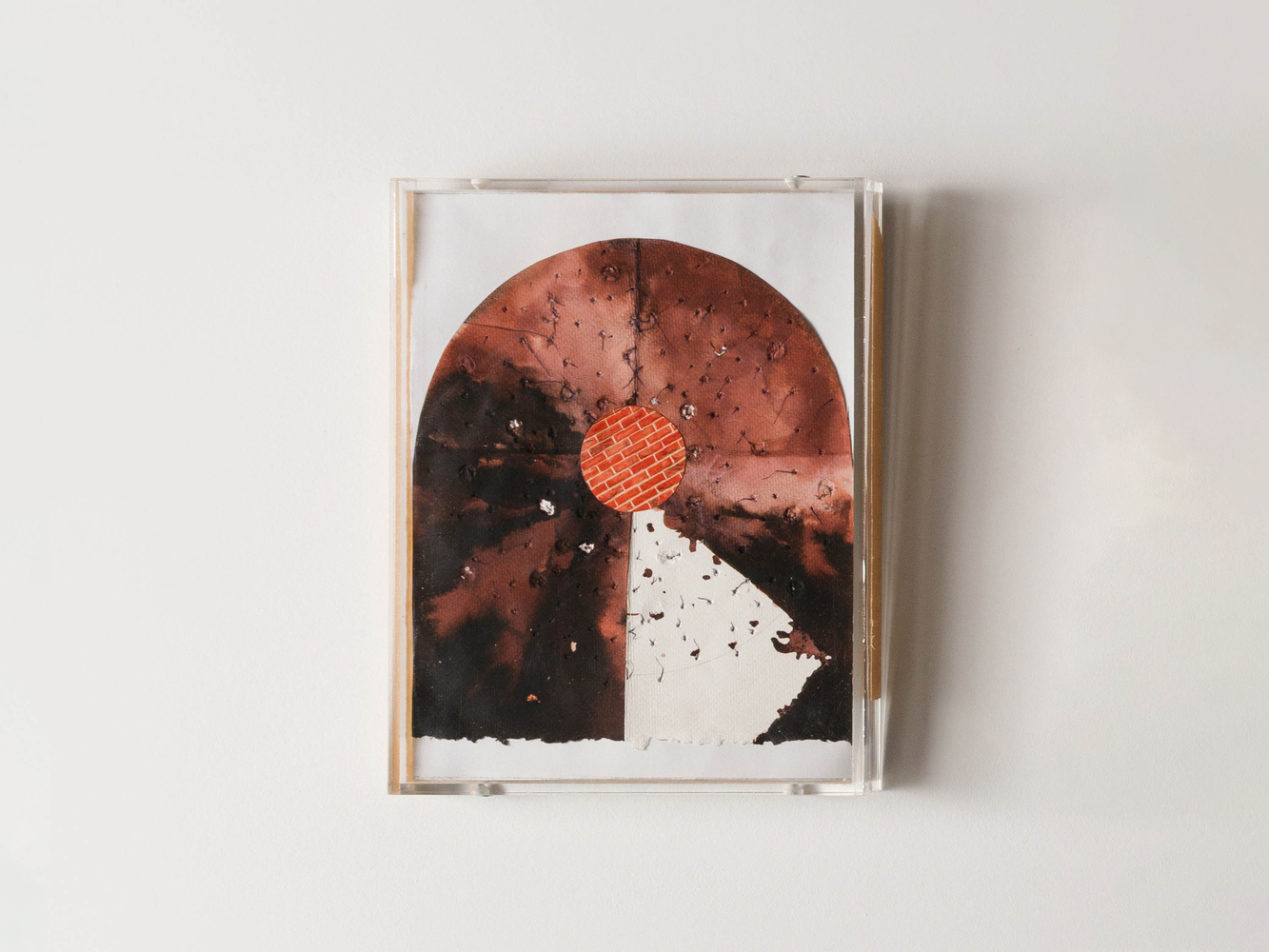
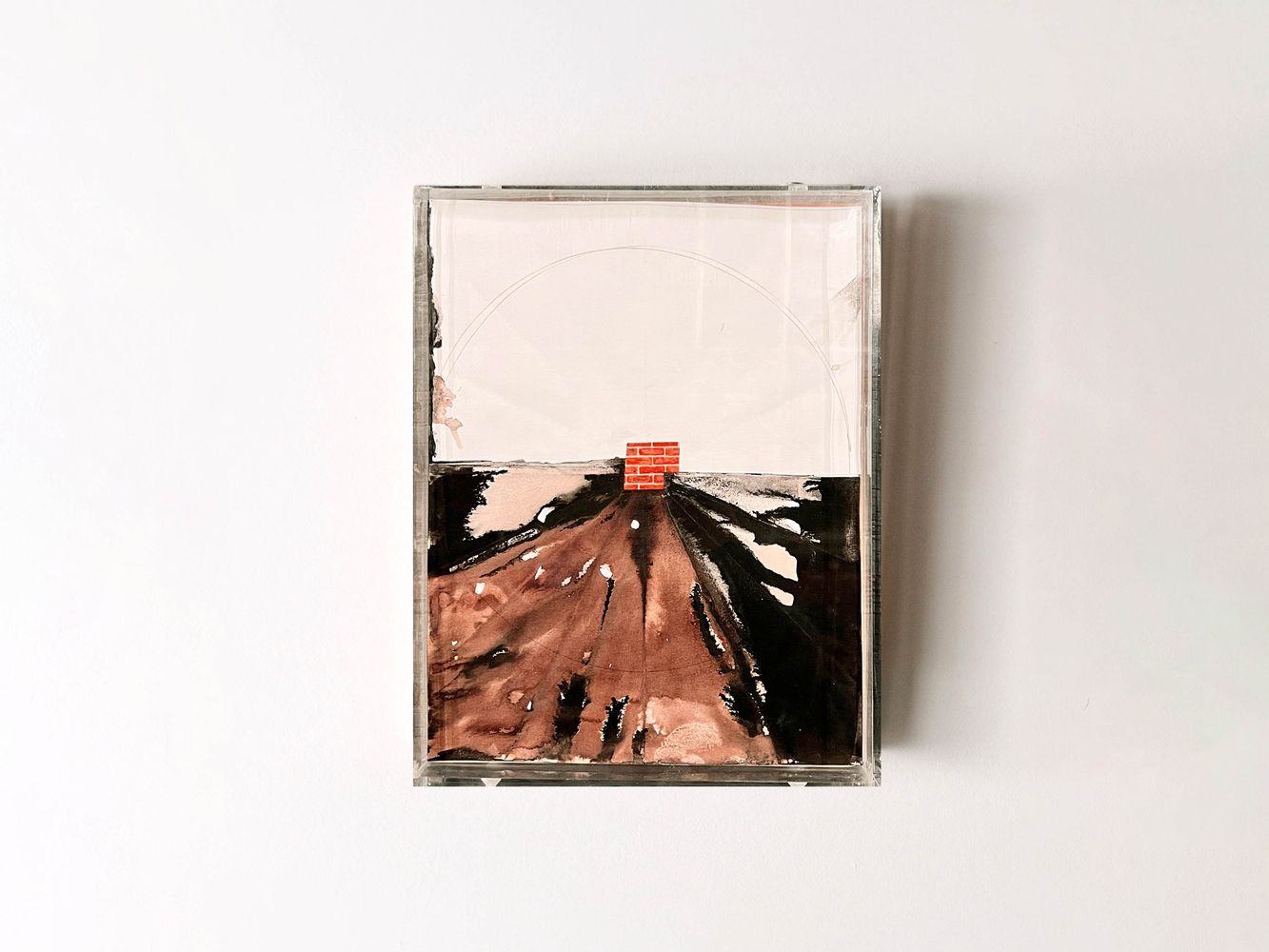
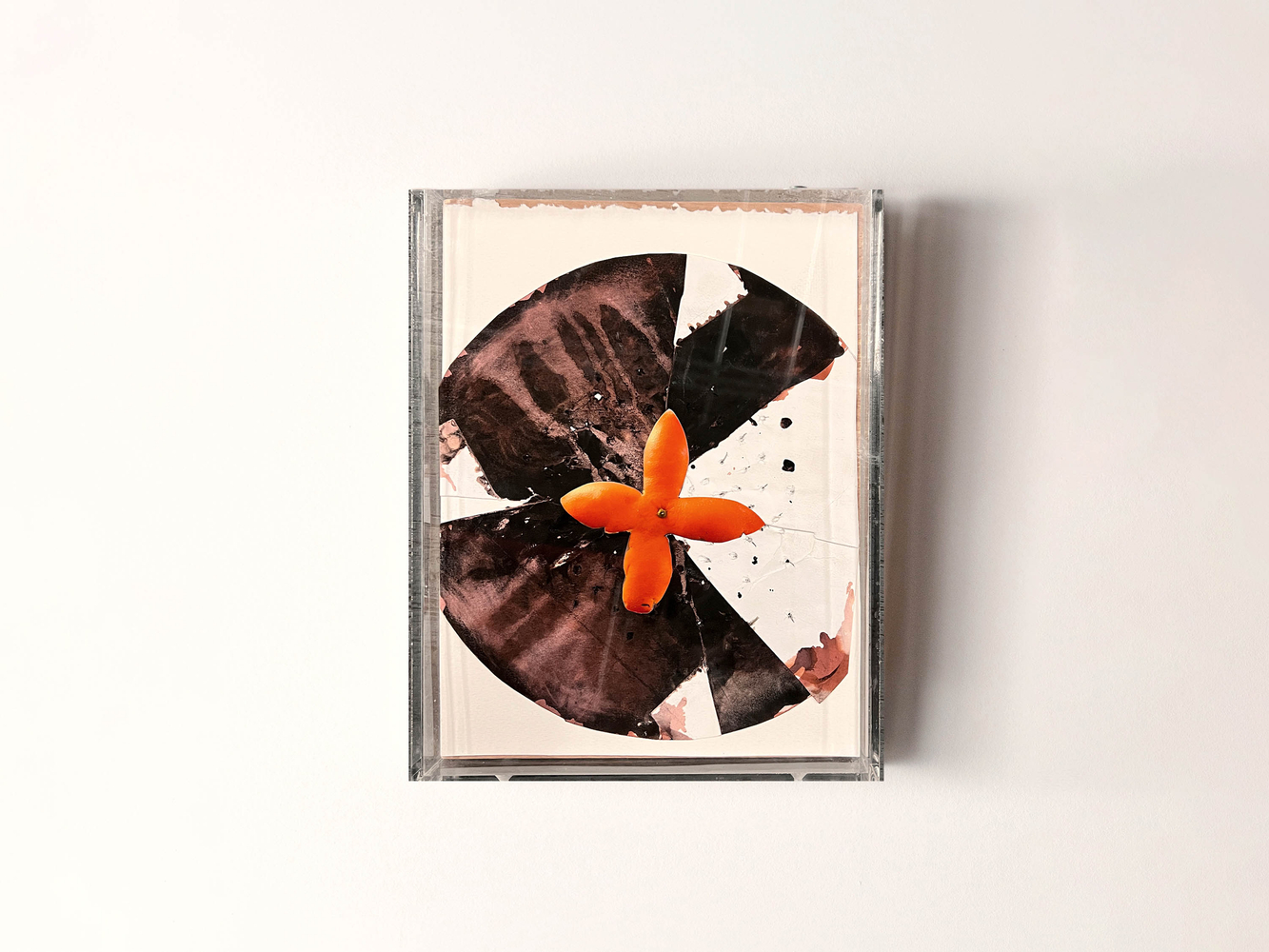
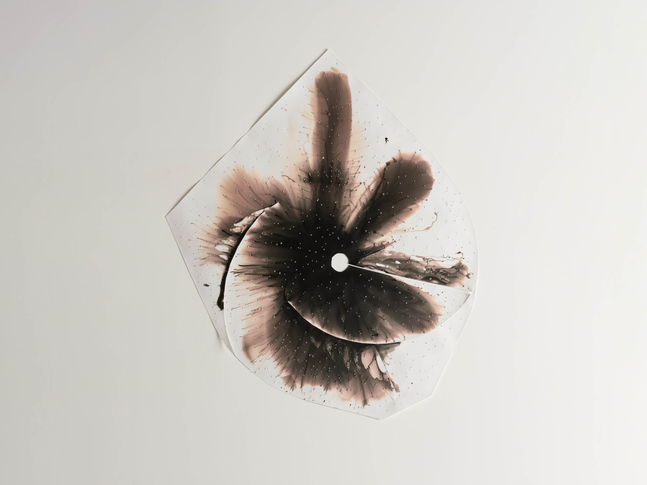
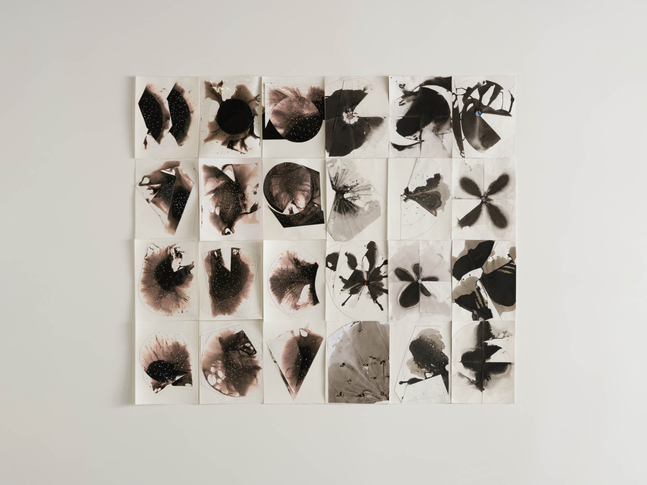
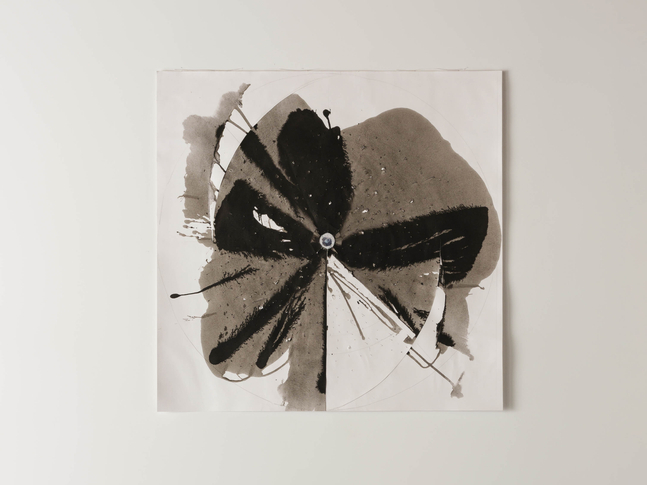
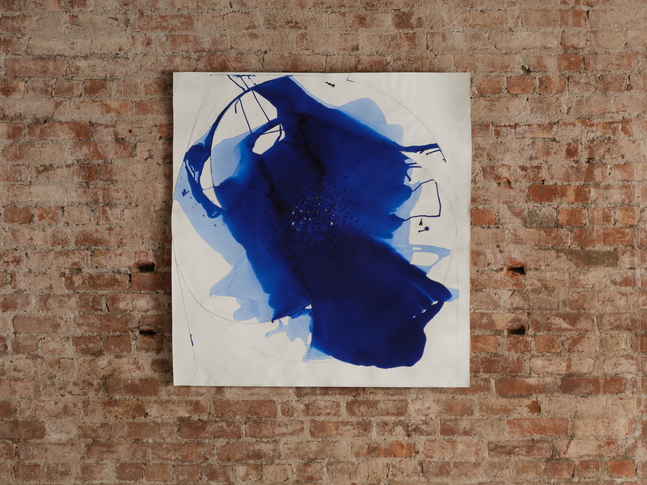
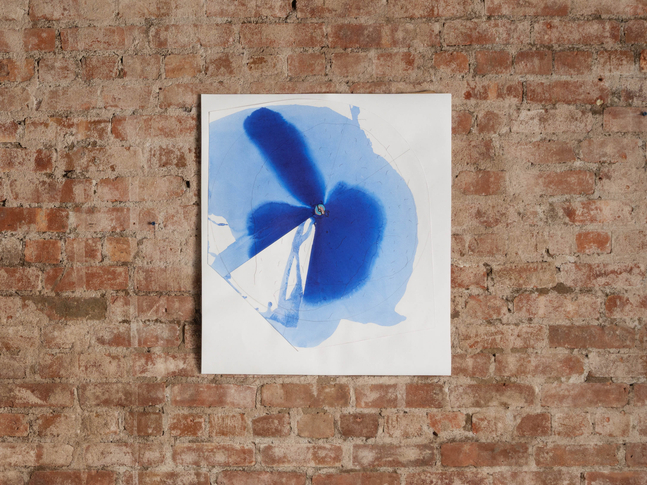
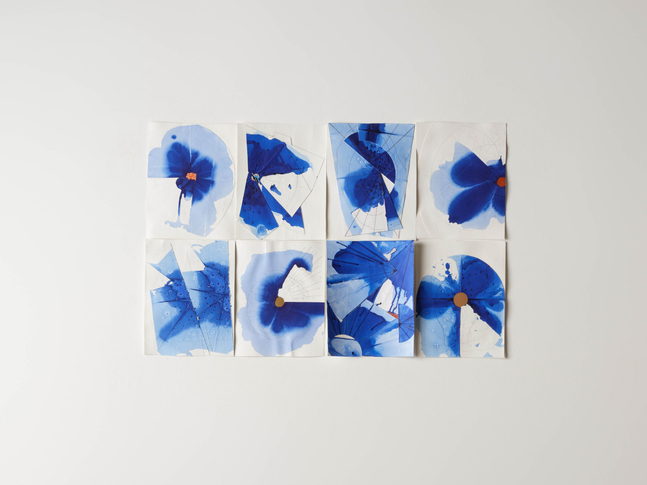
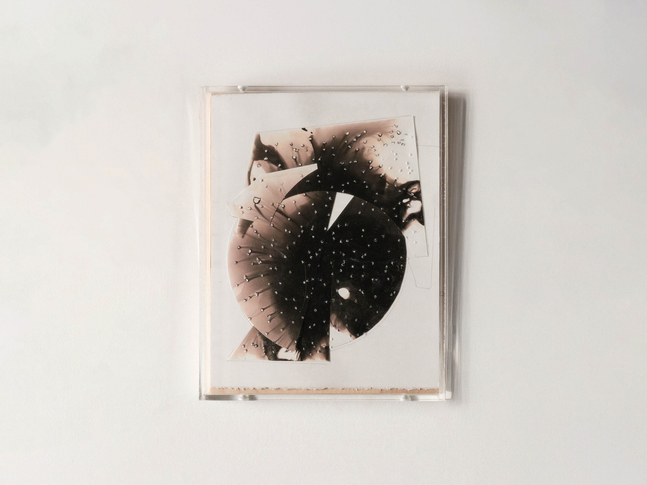
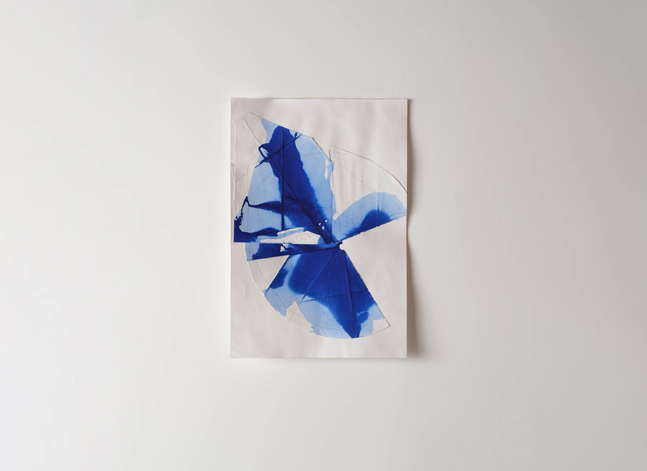
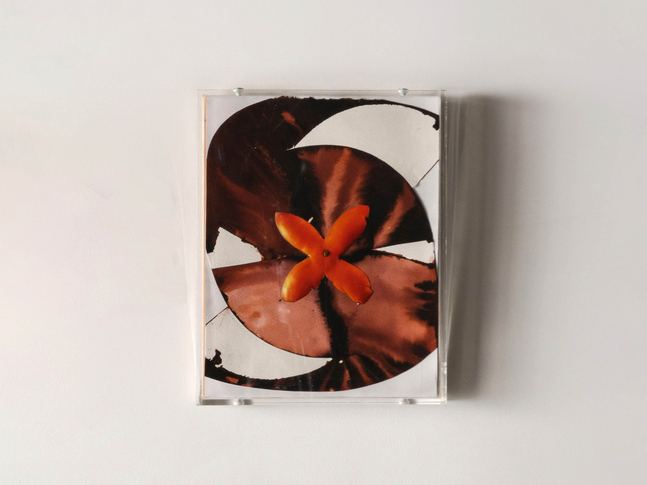
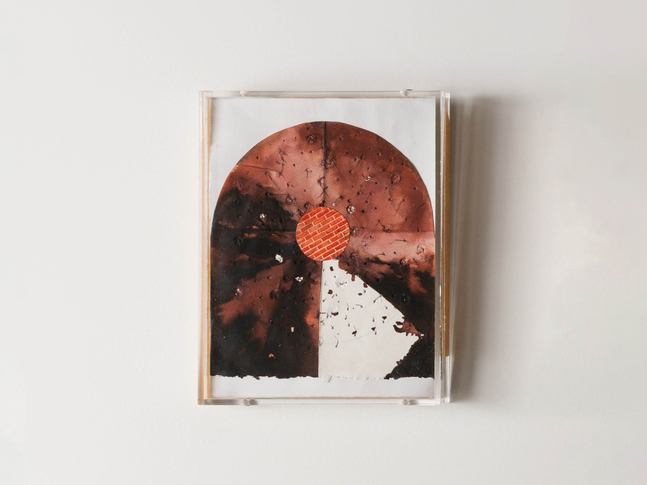
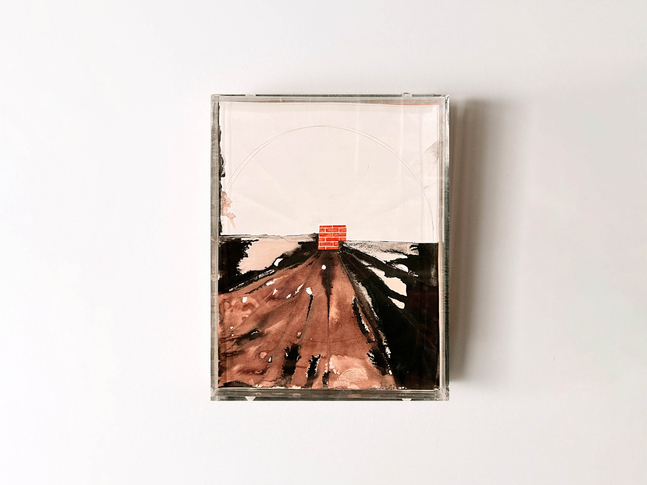
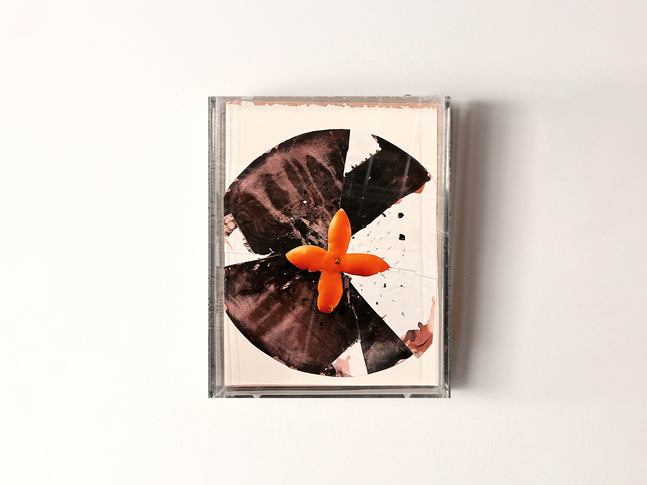
For Eating the Floor, Beiner turns his attention to the two-dimensional plane — the floor — producing ink and photo emulsion-based works on paper which foreground the traces of their production. The works’ compositions are sliced and segmented by creases, perforated to reveal the act of making as much as they might conjure familiar textures and imagery. Each work, having been folded into the shape of a funnel, cone, filter, sieve, or other vessel, becomes the substrate for a momentary action. Beiner pours ink or emulsion into each form, allowing it to drain naturally and mark the paper. Once dry, these products of experimentation in the studio reveal elegant radial patterns, diagrammatic in form yet evocative of macro and microscopic structures. Like Lynda Benglis’ latex pours of the 1960s or Helen Frankenthaler’s soaked and stained canvases of the decade prior, Beiner’s drawings enact their making as much as their results intrigue through washes of color and delicate linear markings. Process is paramount, and these quotidian and humble scenes which recall everyday routines (the brewing of coffee and tea, the act of cupping water in the hands) lend Beiner’s practice an openness to the inherent acts of mark-making which surround us — both within and outside of the studio.
As Beiner writes, “One can imagine a complex process of transformation whereby a formless piece of clay becomes a buoyant form, which becomes a flat shard, which becomes a new form again. The process forms the structure of the thinking, whereby time and transformation become imbedded in the finished form. Ellsworth Kelly found a used flattened paper cup in 1968 after a truck had run it over in the street. This led to a series of sculptures and paintings that used the flat profile as a start. It’s the potential making and use of the cup that I’m interested in. This then goes through a complex process of failing, fragmenting, and flattening.
“Kelly famously stated, ‘I don’t make forms, I find them.’ For me, it’s finding forms through the process that’s meaningful. The work goes through many changes — from flat paper to cut and perforated paper to a taped volume to saturated bright paper to a dull paper to flat paper to cut paper to glued paper. Ink or film developer is poured into the paper forms — as the liquid is flowing through the paper, it’s also being absorbed. Much like the ceramic process, failure is built in — leading to a physical tension that’s hard to achieve through representation. Because of this invented problem, tangents are inevitable along the way. The void in the center of the funnels or the perforations of the sieves offer an opportunity to reveal an underlying ground. Fans, percolators, packaging, waste, and the materials connected to their consumptions form another reference point. The ubiquitous ceramic cup is both everything and nothing.”
Beiner received a BFA from NSCAD University and an MFA from Alfred University in 2012. His work has been exhibited internationally, including solo exhibitions at Hostler Burrows, Cross Mackenzie Gallery, Craft Ontario, and group exhibitions at the Gardiner Museum, Art Gallery of Alberta, Art Gallery of Nova Scotia, and the Katzen Museum at American University. He has attended residencies at the Berlin Ceramics Centre, Private Studio Jingdezhen, China, and the Center for Contemporary Ceramics at California State University Long Beach. He has been the recipient of the the Winnifred Shantz Award and the NCECA Emerging Artist Award and received grants from the Canada Council for the Arts and the Alberta Foundation for the Arts. He has taught at numerous institutions, including as an assistant professor at the Alberta University of the Arts, lecturer at Princeton University, Bowling Green State University, and as an adjunct faculty at New York University and Millersville University.